Level Design &
Destructible Enveironments
Focus: Chamber based Level design with minimal mechanics.
Duration: 6 weeks
Engine: Unreal Engine 5

Video showcasing intro level and mood of the game
Design Intent
OUT was part of a 6 week personal assignment where I tasked myself with researching destruction systems in games and creating a game based around the concept.I had heard about fractures in Unreal before, and since I had been working in Unreal for two weeks a month earlier I thought that it would be good to spend more time in the engine since it was relatively recent in my memory.When practicing using fractures I found them to be a bit more restrictive than I liked them to be, nevertheless I still wanted to pursue making at least one level with them.I ended up making four levels in the end, each with seven minutes of playtime.It ended up shifting into more of a puzzle based game than initially expected, since I found when testing the mechanics that it was more engaging when the player had to think about what to destroy instead of just destroying for the sake of it.To fit with the puzzle style better I also added the ability to grab boxes and from that point the games mechanics were finished.
Room Breakdown
Initially I wanted this game to be more open and free, with a temple and forest aesthetic and open skies. But since I had worked so much on chamber based games in prior assignments I still had a feeling in me that I probably could create better interior levels than what I had made previously. Since I was slightly disappointed in my earlier work.So I switched to focusing on interior levels but I still wanted the temple feeling. So I mixed weird statue faces and confusing room layouts with a Blade runner esque yellow glow.
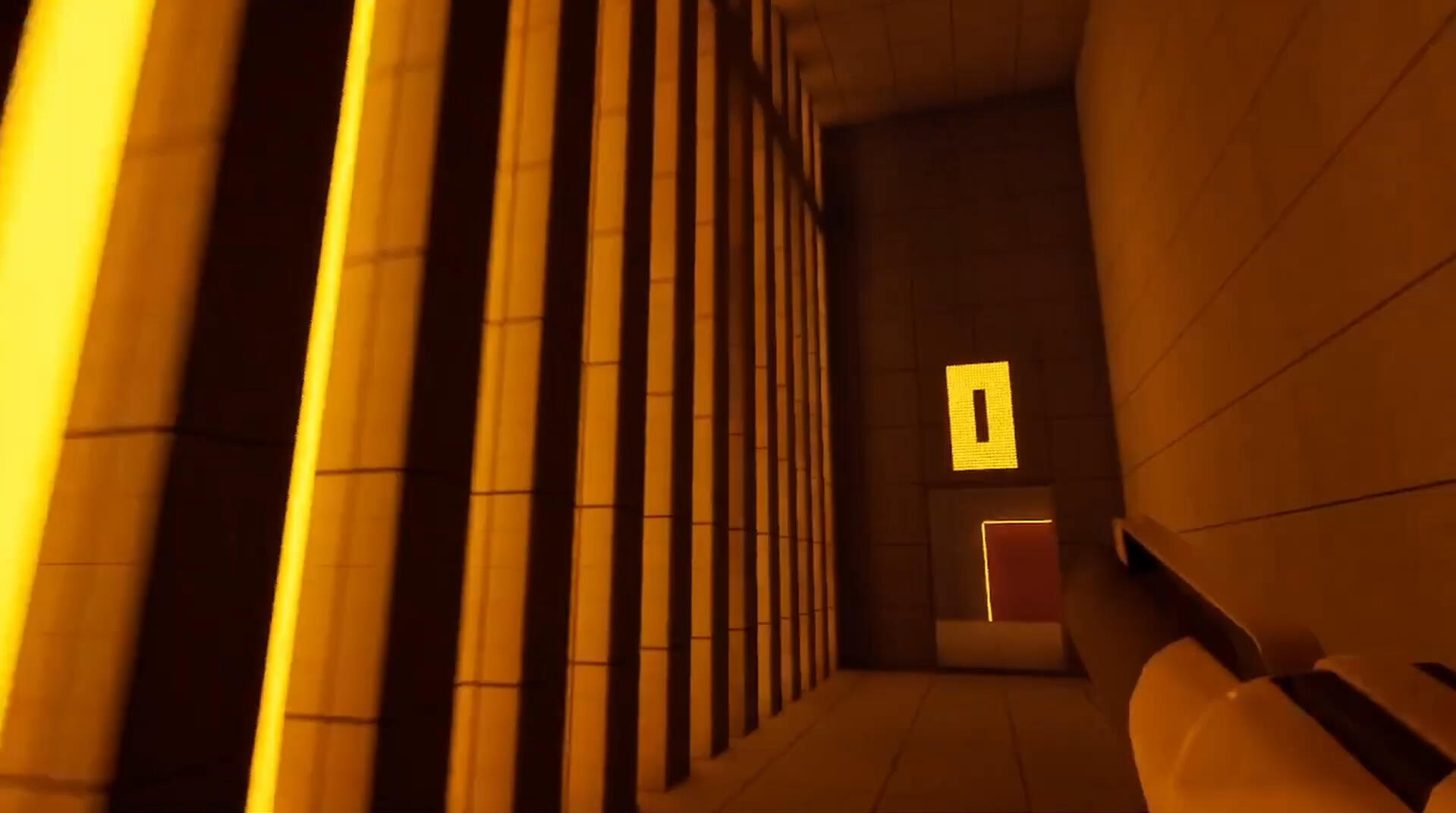
For this breakdown I will only be focusing on the first level of the game since it is the one I have the most documentation on and I think it shows my thought prosses the best.
When it came time to start designing the level I knew I wanted to start small and cramped. With every room the player entered it got a little bigger than the previous, giving a sense of progress.
These are the initial sketches I made Trying to figure out puzzles for the level. Both of these ended up in the final game.
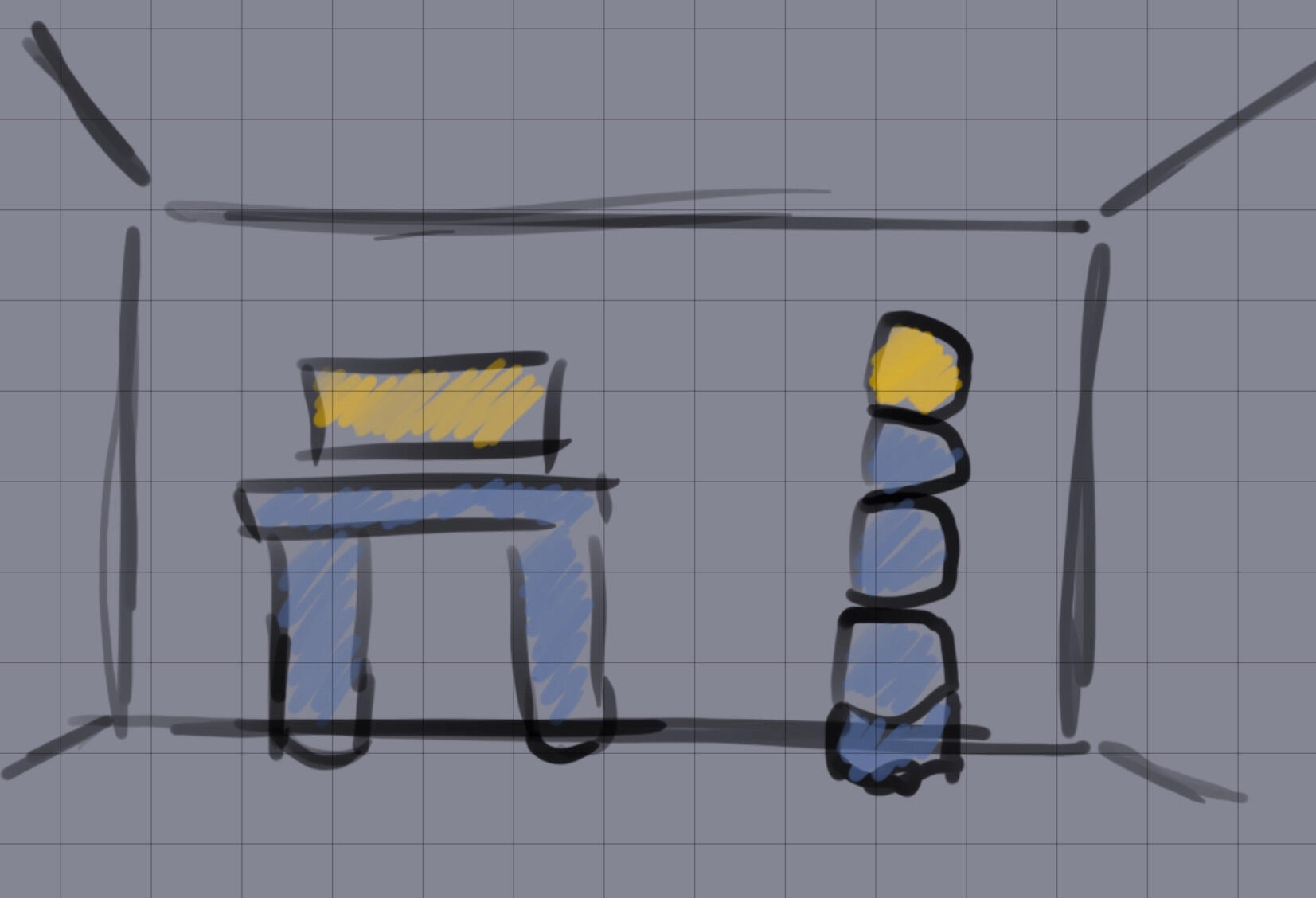
This was meant to be the first room where a player is introduced to blocks.
A more simple room where the players don't have to think much on how to get the blocks down.
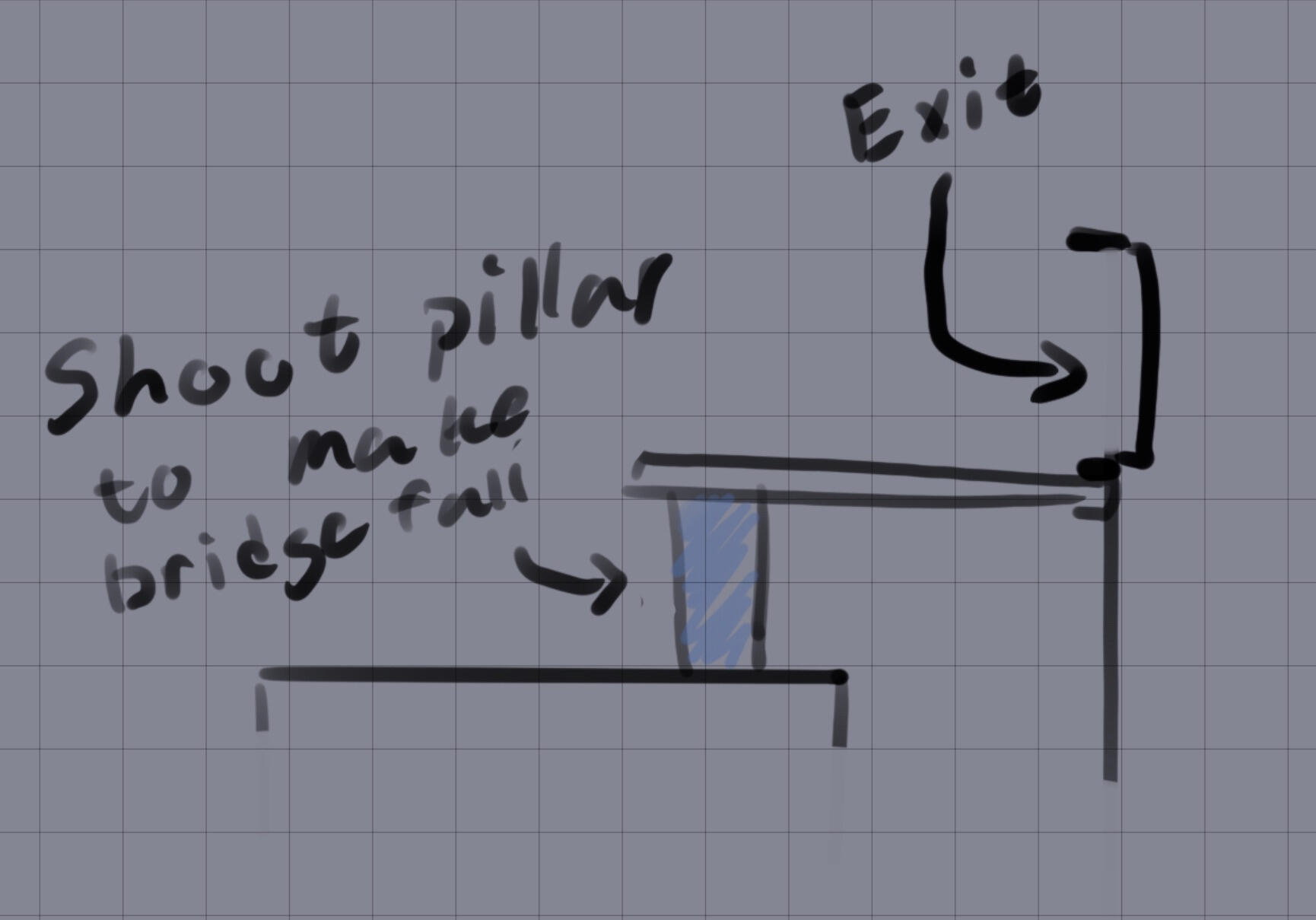
I also wanted a falling bridge in the game. I initially planned for this to be on the ground just like the previous puzzle, but when I noticed how similar the puzzles were I thought: this can be a point of interest in a more complicated larger puzzle.
I then had an idea for a platforming section where the player has to create their own platform.
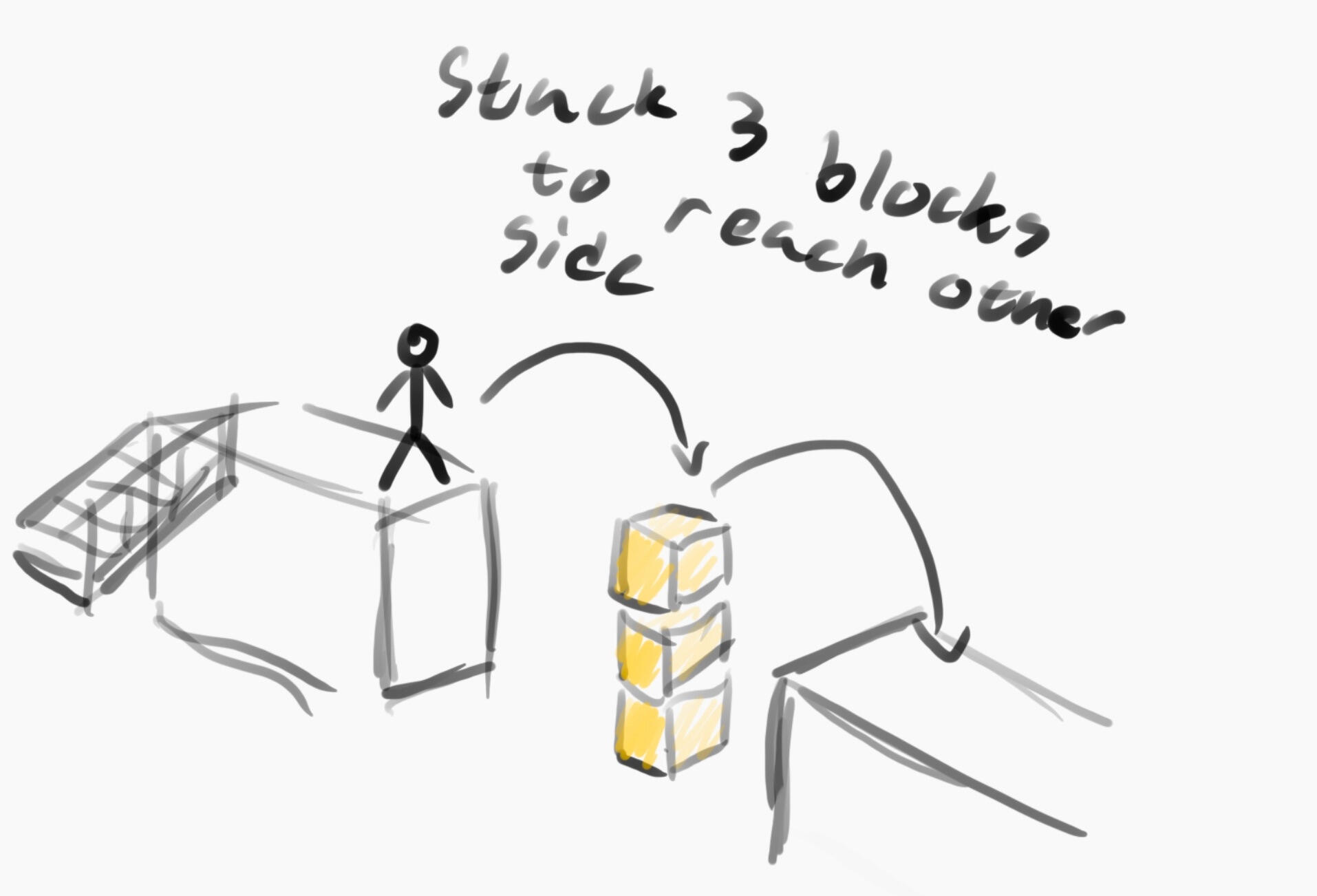
While I liked this initial idea, I thought it was also a bit to simple. Then I thought it would be cool if the player had to backtrack to the previous room to get the final box.
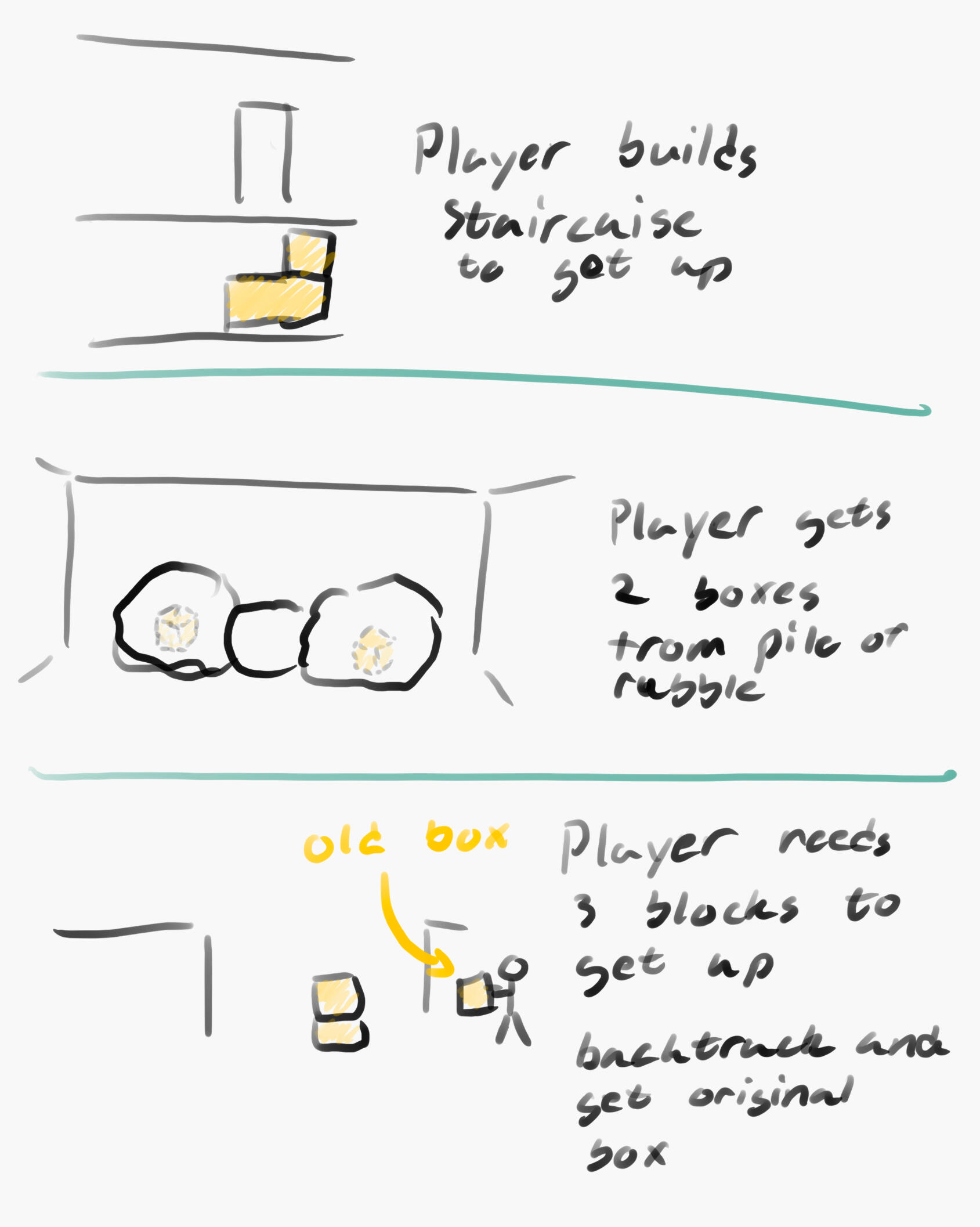
I then got the Idea of placing a door that locks both areas together, at the top of the staircase the player previously built.In the first draft this staircase was supposed to lead to a ramp, that lead to a latch in the roof that the layer would shoot down.But I thought that journey would be a bit to far to backtrack and I changed the second room to be right next to the first one, with a balcony overlooking both, giving them a sense of connectivity.
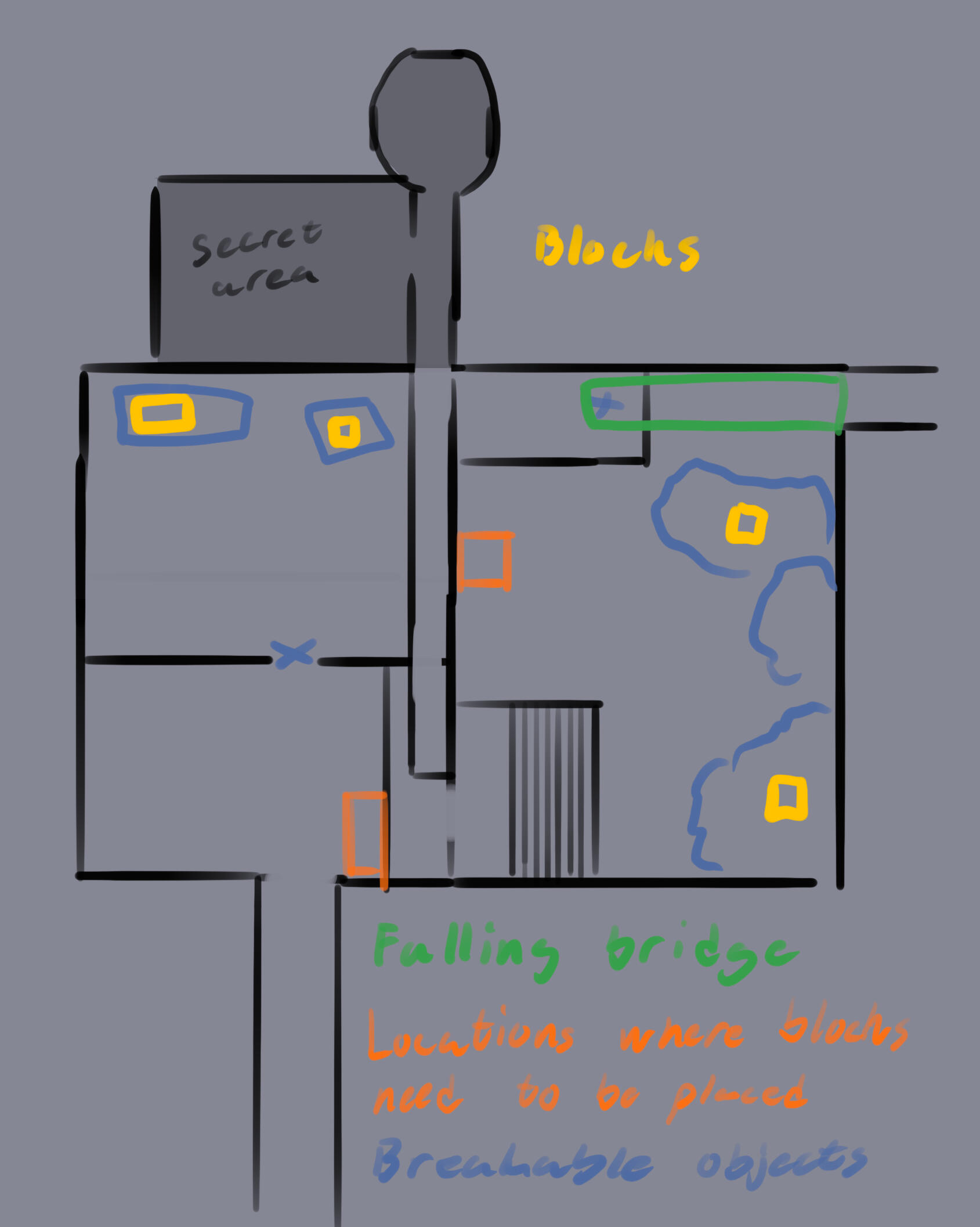
After deciding on connecting the levels, and making their puzzles depend on each other I felt that the level really started to take shape.I started thinking about the game in a completely different light, where the levels were not as separated anymore. They allowed for backtracking and more overarching problem solving.I made this sketch where I grouped the sections together way more closely. And even added secrets that the player would be able to reach with even more backtracking later on in the game.This final level was far from perfect however, and I changed multiple things for the purpose of readability and variety.I for example added an arrow to the before mentioned falling bridge as a guide since many players felt confused about their goal.
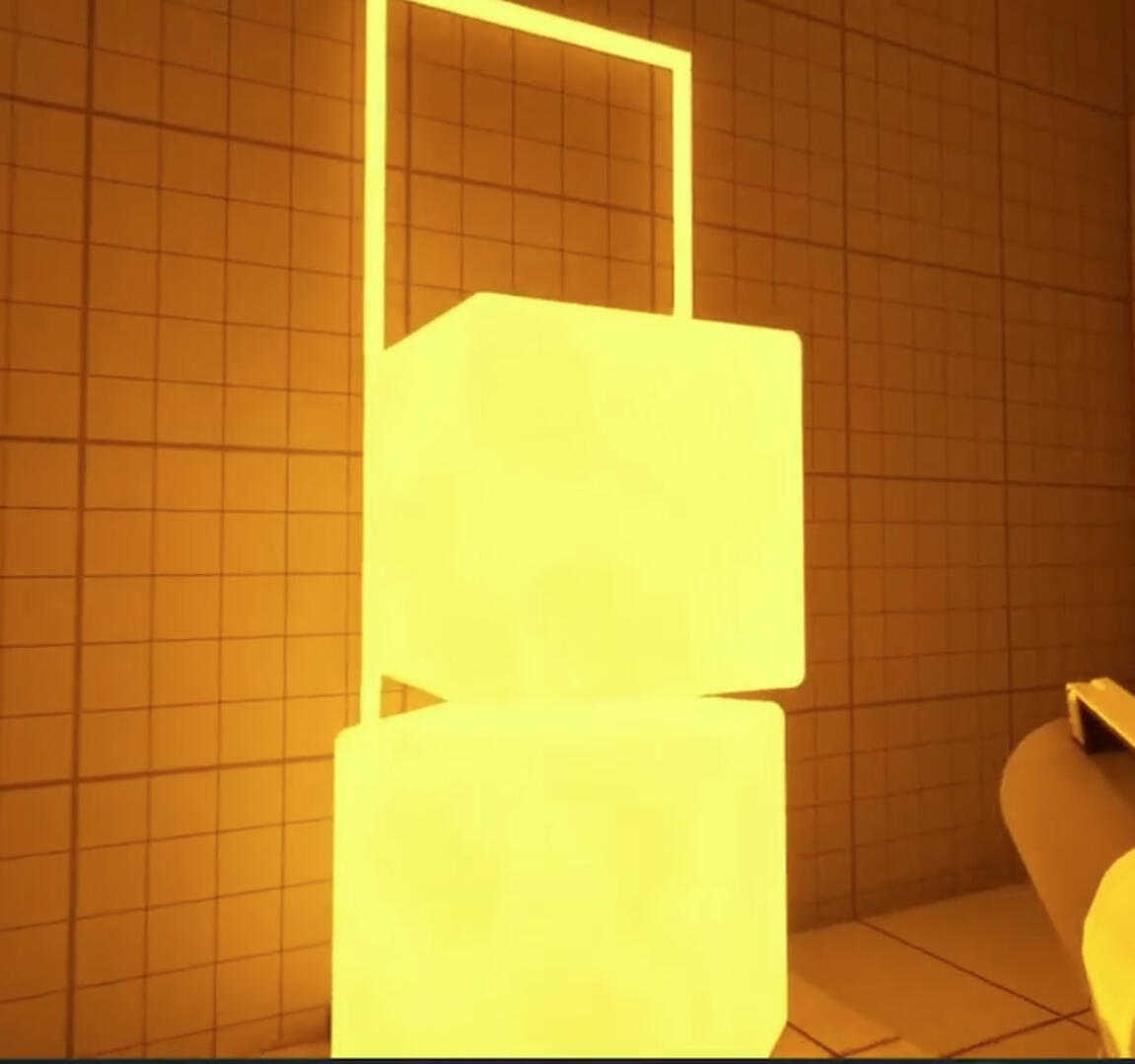
The most important change I made was adding a yellow outline where the blocks were supposed to sit, that clearly showed when the tower was large enough. Many players failed to realize that two blocks were to few to make the jump. But with the outline it became clear.
Takeaways
The biggest takeaway I got from this project was how to make levels that didn't separate their puzzles into different chambers. I was very chamber/level based earlier and still am to some degree. But this project made me realize that I could connect the chambers together and make for more interesting experiences. This was the first time I had people go "aha" while playing my games.